Just some eerie photos from some not too friendly hot springs in the Rift Valley of Ethiopia:
http://www.slate.com/blogs/atlas_obscura/2013/08/23/hottest_place_in_the_world_dallol_is_a_boiling_salty_landscape_hostile_to.html
Below, a more inocuous hot spring experience in Panama, at Los Pozo:
Frequented by the locals as a natural 'hot tub' the bumpy ride in makes a hot soak at the end a good idea. Buth then you have to drive out again!
A Blog About Film Photography and Film Cameras: Traditional, Experimental, and Alternative Processes.
Showing posts with label Panama Series. Show all posts
Saturday, August 31, 2013
Tuesday, October 19, 2010
Last Week's Volcano: # 42, Cerro Chame

Because I didn't post one last week.........Cerro Chame, western Panama, is part of the old volcanic core of the Isthmus.
Labels:
ENC-II Film,
Minolta,
Minolta X-700,
Panama Series,
Volcanoes
Saturday, October 9, 2010
Weekly Volcano # 41: Farming on the Flanks of a Volcano

Farming on the north flank of Volcan Baru, Panama. good soil, but unfortunately it destrys the already fragile Cloud Forest.
Labels:
ENC-II Film,
Minolta,
Minolta X-700,
Panama Series,
Volcanoes
Saturday, August 21, 2010
Friday, August 20, 2010
Panama Lifestyles V: at the Beach
Playa Esmeralda's Black Beach. The black mineral is an iron ore, magnetite, a common mineral in volcanic rocks and more resistant to weathering. Washed down to the ocean via rivers and then washed back up on the beach by waves.
Labels:
ENC-II Film,
Film Imaging,
Minolta,
Minolta X-700,
Panama Series
Thursday, August 19, 2010
Weekly Volcano #34: Los Pozos de Tisingal
Los Pozos are a series of hot springs inside Tisingal Caldera. Locals visit for the curative powers, especially for pain. But the very rough boulder hopping road in (and back out again) made me question what relief the trip actually provides.
Labels:
ENC-II Film,
Film Imaging,
Minolta,
Minolta X-700,
Panama Series,
Volcanoes
Wednesday, August 18, 2010
Tuesday, August 17, 2010
Monday, August 16, 2010
Panama Lifestyles II: Keeping it Simple
Cerro Punta is one of many small farming communites at the base of Volcan Baru. I saw this farmer plowing the 'traditional' way, which was perfectly adequate for his small farm.
Labels:
ENC-II Film,
Film Imaging,
Minolta,
Minolta X-700,
Panama Series
Sunday, August 15, 2010
Panama Lifestyles I: Mountain Farming
This week, computer permitting, we will take a look at the western Panama way of life. Today the Finca (farm) next door to my friend's home.
The Chiriqui District of western Panama is that nation's bread basket. A twelve month growing season and rich volcanic soil create an ideal farming environment.
Labels:
ENC-II Film,
Film Imaging,
Minolta,
Minolta X-700,
Panama Series
Friday, August 13, 2010
Weekly Volcano #33: Volcan Baru and Tisingal Caldera
Back in western Panama, with Volcan Baru in the Background and and the flank of Tisingal Caldera visible in th foreground.
Finally up and running again. We had a DSL modem that was crashing my computer. Still some other computer gliches, so I'll make a few postings ahead just in case.
Labels:
ENC-II Film,
Film Imaging,
Geology,
Minolta,
Minolta X-700,
Panama Series,
Volcanoes
Sunday, August 1, 2010
Faith on Film: Mother Mary Protect Us!
In Catholic countries you will often find Mary near the volcano summit.
Here at the Volcan Baru Summit, but I saw this on Piton de Fournaise (Reunion Island) as well.
Labels:
ENC-II Film,
Faith on Film,
Minolta,
Minolta X-700,
Panama Series
Saturday, July 31, 2010
Old City, New City, Panama City
Contrasting Cities, old and new Panama City:
The Cathedral bell tower was used to keep watch for pirates and warn the city if they appeared.
Looking at the new city across the mudflats at low tide. A typical Latin American coastal city.
Labels:
ENC-II Film,
Film Processing,
Minolta,
Minolta X-700,
Panama Series
Friday, July 30, 2010
The Cardenas Fire
Cardenas is a residential area within the Old Canal Zone. Americans born in the Canal Zone were granted dual citizenship and allowed to buy their homes as part of the Canal transfer.
My guide in Panama was in that category and we stayed at his sister's house in Cardenas. The winter and spring being dry season, wildfires were common. This one was just around the corner and closer than I liked. You can see houses and cars in the photos.
No red rocks this Friday, but still something red!
Labels:
ENC-II Film,
Minolta,
Minolta X-700,
Night Moves,
Panama Series
Thursday, July 29, 2010
The Baru Surprise
The Summit of Volcan Baru is the site of a major communications center for Panama (and presumably nearby eastern Costa Rica). The Center is maintained 24-7 by an on-sight engineer that stays for 30 day shifts. This is necessary because during the rainy season (spring and summer) the 4X4 road to the top may become impassable.
Labels:
ENC-II Film,
Film Processing,
Geology,
Minolta,
Minolta X-700,
Panama Series,
Volcanoes
Wednesday, July 28, 2010
Weekly Volcano #31: More from Volcan Baru, Western Panama
In keeping with this week's kickoff Panama Theme we take another look at Volcan Baru, one of only two active volcanoes in Panama. I use active in the geologic context. It has been centuries since Baru erupted, but it is dormant, not extinct, because it was active less than 10,000 years ago. That is the geologic definition of active.
Located in the Chiriqui district of Western Panama near the Coast Rican border. The cooler temperature and rich volcanic soil make this the main agricultural area of Panama. And there is a surprise on Baru that we will see later........
Labels:
ENC-II Film,
Film Imaging,
Film Processing,
Geology,
Landscapes,
Minolta,
Minolta X-700,
Panama Series,
Volcanoes,
Winter
Tuesday, July 27, 2010
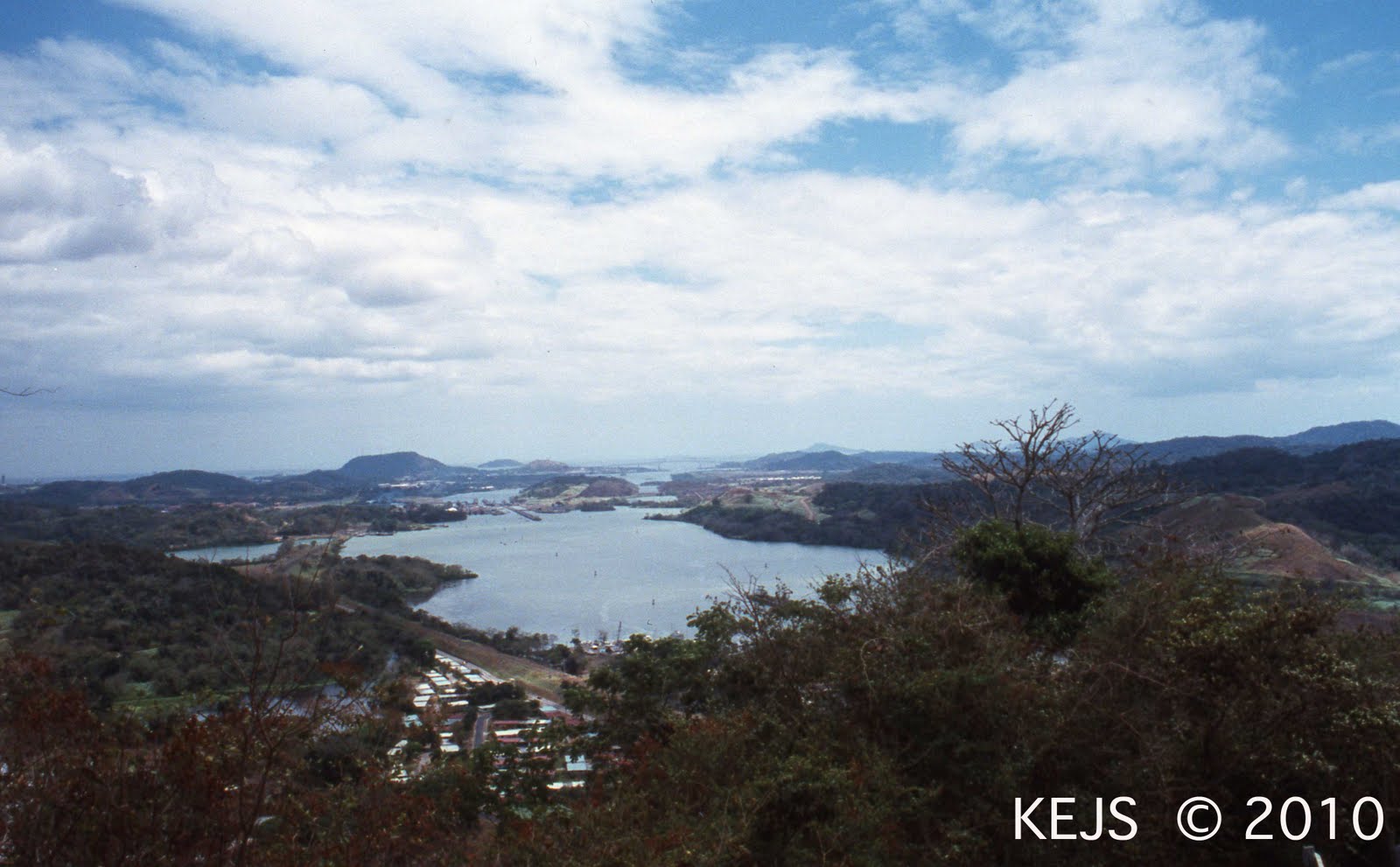
The Gaillard Cut
The Culebra Cut crosses the continental divide of Panama. It was renamed after Maj. David Du Bose Gaillard the officer in charge of this section of the project, who died before its completion. The American version of the canal was constructed by the US Army Corps of Engineers (1904-1914), after the French attempt to build a sea-level canal went bankrupt.
This is the most famous part of the Gaillard Cut. For more info check the link. I have a two-fold connection to the Panama Canal. Two of my mother's uncles moved to Panama from Barbados to work on the construction. The Americans recruited mostly from English-speaking islands in the Caribbean for workers. They settled there and hence I have Panamanian family. Part II, my mother worked for the US Army Corps of engineers and the people that I met there are responsible for my becoming a geologist.
All photos from Panama are taken with the same camera, lens, and film as listed in the first post (or check the labels)
Approaching the Cut from the north
This is the most famous part of the Gaillard Cut. For more info check the link. I have a two-fold connection to the Panama Canal. Two of my mother's uncles moved to Panama from Barbados to work on the construction. The Americans recruited mostly from English-speaking islands in the Caribbean for workers. They settled there and hence I have Panamanian family. Part II, my mother worked for the US Army Corps of engineers and the people that I met there are responsible for my becoming a geologist.
All photos from Panama are taken with the same camera, lens, and film as listed in the first post (or check the labels)
Labels:
ENC-II Film,
Film Imaging,
Film Processing,
Geology,
History,
Minolta,
Minolta X-700,
Panama Series,
Winter
Monday, July 26, 2010
The Panama Series Begins!
....With something really obvious, The Panama Canal:
Looking north towards the Caribbean (check a map it is north) viewing Lake MiraFlores which separates the Pedro Miguel Locks from the Miraflores Locks. We are looking at the The Pedro Miguel Locks upstream.
The Miraflores Locks lead to the Pacific Ocean.........
And the Miraflores Spillway keeps the Canal Level above Pacific Sea Level.
I still have about a hundred slides to scan, but I've done enough to get started.
Camera: Minolta X-700
lens: Tamron 28-200 f/2.8 zoom
Film: ENC-II (motion picture film)
Labels:
ENC-II Film,
Film Processing,
History,
Landscapes,
Minolta,
Minolta X-700,
Panama Series,
Winter
Wednesday, June 23, 2010
Weekly Volcano #26: Cerro Totuma
Cerro Totuma is a lava dome within Tisingal Volcano, a neighbor of Volcan Baru in western Panama.
We're starting a Panama Series..............
Labels:
ENC-II Film,
Geology,
Minolta,
Minolta X-700,
Panama Series,
Volcanoes
Tuesday, June 8, 2010
Weekly Volcano #24: Volcan Baru
Volcan Baru, Western Panama
Should we start a Panama Series?
I have tons of photos, some of them actually worth seeing!
Labels:
ENC-II Film,
Geology,
Minolta,
Minolta X-700,
Panama Series,
Volcanoes
Subscribe to:
Posts (Atom)